

The front, white part of the eye is covered by a transparent membrane called the conjunctiva. The conjunctiva has a rich blood supply. A sub-conjunctival haemorrhage occurs when these tiny blood vessels leak, causing a small amount of blood to gather between the sclera (white eye wall) and conjunctiva. Because these membranes are transparent very small bleeds can look quite dramatic. However, it is very common and will not damage your vision
The eye will look very bloodshot and you may have very mild discomfort or a feeling of something being in the eye.
Practically all sub-conjunctival haemorrhages occur for no obvious reason and there is no associated illness. They often occur after a bout of severe coughing or sneezing. Occasionally there are associated with high blood pressure and if recurrent bleeds occur it is worth checking your blood pressure.
The bloodshot appearance usually disappears 7 to 14 days without treatment.
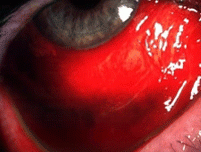
Photograph of a severe sub-conjunctival haemorrhage. Despite the dramatic appearance no treatment is usually required.
Disclaimer : The information provided in this website is intended as a useful aid to general practitioners, optometrists and patients. It is impossible to diagnose and treat patients adequately without a thorough eye examination by a qualified ophthalmologist, optometrist or your general practitioner. Hopefully the information will be of use prior to and following a consultation which it supplements and does not replace.