What is a Fluorescein Angiogram?
Fundus Fluorescein Angiography (FFA) is an extremely valuable test that provides information about the circulatory system and the condition of the back of the eye – the fundus or retina. Fluorescein is the type of dye that is used and an angiogram is a study of the blood vessels. FFAs are useful for assessing many eye diseases that affect the retina.
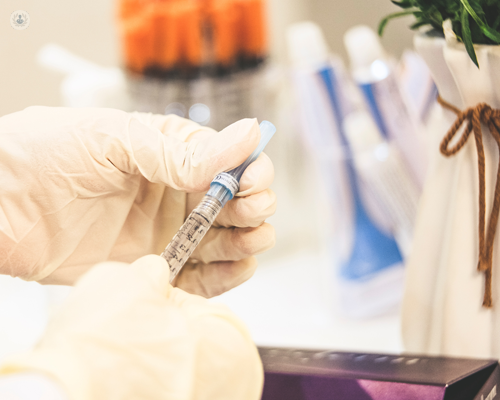
The test is performed by injecting the fluorescein dye into a vein in the arm. In just seconds, the dye travels to the blood vessels inside the eye. A digital camera equipped with special filters that highlight the dye is used to photograph the fluorescein as it circulates through the back of the eye. If there are any circulation problems, swelling, leaking or abnormal blood vessels, the dye and its patterns reveal these in the photographs. Mr Tanner can then make a diagnosis, and decide possible treatment options.
Fluorescein Angiogram Procedure
- The procedure itself is short and simple.
- Eye drops will be instilled in each eye to make your pupils larger.
- An ophthalmic photographer will then take pictures of the retina using a special camera.
- Next, the doctor will inject a small amount of the dye into your arm, much like a blood test. This will colour your blood brightly for a couple of minutes.
- Following the injection, photos are taken quickly over a period of 60 seconds.
- A few more pictures are then taken during the next 10 minutes.
Things you may notice
- Your vision may be dark or have a colour tint for a few minutes.
- Objects close to you may appear unclear because of the eye drops you received.
- Your urine will be bright yellow for a day or two as your body eliminates the dye.
- Your skin may have a yellowish colour for a few hours following the injection.
- The lights flashed at you are very bright but will NOT damage your eyes.
- Because your pupils are larger you may be more comfortable wearing dark glasses afterwards.
- You may experience a short wave of nausea after the injection. This passes very quickly.
Risks
In very rare cases, you could react to the dye. For this reason we ask you to remain in the hospital Eye Department for half-an-hour after the procedure.
There is a very small risk of serious complications (collapse, death). Therefore, this test is only done when your doctor thinks it is essential for diagnosis and/ or treatment planning.