

Episcleritis is an inflammation of one of the surface layers of the eye. The front, white part of the eye called the sclera is covered by transparent membrane called the conjunctiva. Between these is another transparent layer called the episclera. When this is inflamed it is known as episcleritis.
The cause is unknown in most cases. It normally affects only one eye and is a benign condition that does not damage your sight.
Episcleritis usually resolves spontaneously in about two weeks. Occasionally anti-inflammatory drops are prescribed to hasten resolution.
Unfortunately episcleritis frequently recurs for several years before eventually stopping.
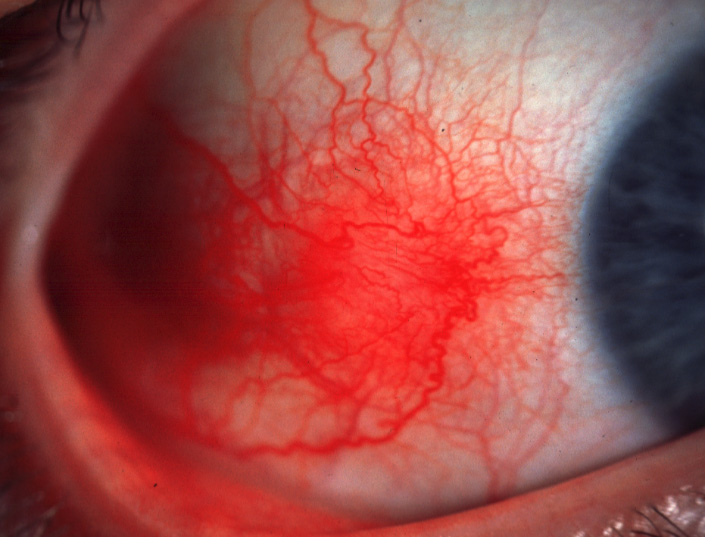
Photograph of typical case of episcleritis showing localised area of engorged blood vessels with surrounding inflammation
Disclaimer : The information provided in this website is intended as a useful aid to general practitioners, optometrists and patients. It is impossible to diagnose and treat patients adequately without a thorough eye examination by a qualified ophthalmologist, optometrist or your general practitioner. Hopefully the information will be of use prior to and following a consultation which it supplements and does not replace.