

Conjunctivitis means inflammation of the conjunctiva. The conjunctiva is the thin ‘skin’ that covers the white part of the eyes and the inside of the eyelids. There are many causes but most infective cases are caused by either bacteria or viruses. Most bouts of infective conjunctivitis are not serious, and soon clear.
Sore, gritty, red eyes, and discharge which may be watery or sticky, depending on the cause. This makes the eyes sticky in the mornings. One eye may be infected, but it usually spreads to both eyes. Some soreness may develop, but it is not usually very painful. Vision is not normally affected.
Bacterial conjunctivitis is easily treated with antibiotic drops or ointment and usually settles down over about 10 days. There is no direct treatment for viral conjunctivitis. It will gradually clear up on its own, but often antibiotic drops (eg: chloramphenicol) are prescribed to prevent a secondary bacterial infection occurring. (Tell your doctor if you are pregnant as some antibiotic eye drops are not suitable.)
Occasionally swabs are taken to determine the cause of the conjunctivitis but this is not usually necessary.
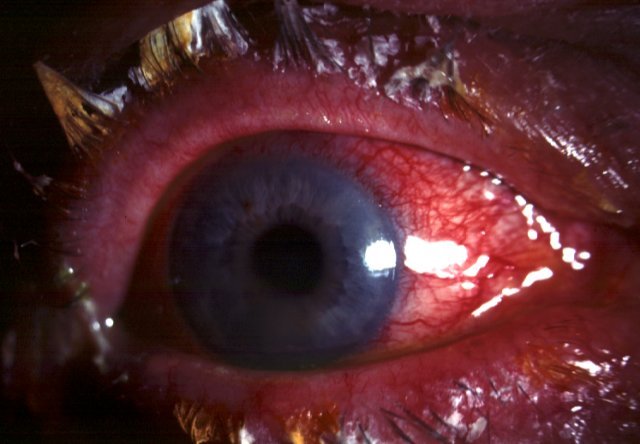
Photograph of a severe case of infective conjunctivitis
Conjunctivitis is infectious, so it is important that you follow some basic advice:
Most infections start to settle on treatment after a few days. However, you should see your doctor again if any of the following occur.
Disclaimer : The information provided in this website is intended as a useful aid to general practitioners, optometrists and patients. It is impossible to diagnose and treat patients adequately without a thorough eye examination by a qualified ophthalmologist, optometrist or your general practitioner. Hopefully the information will be of use prior to and following a consultation which it supplements and does not replace.