

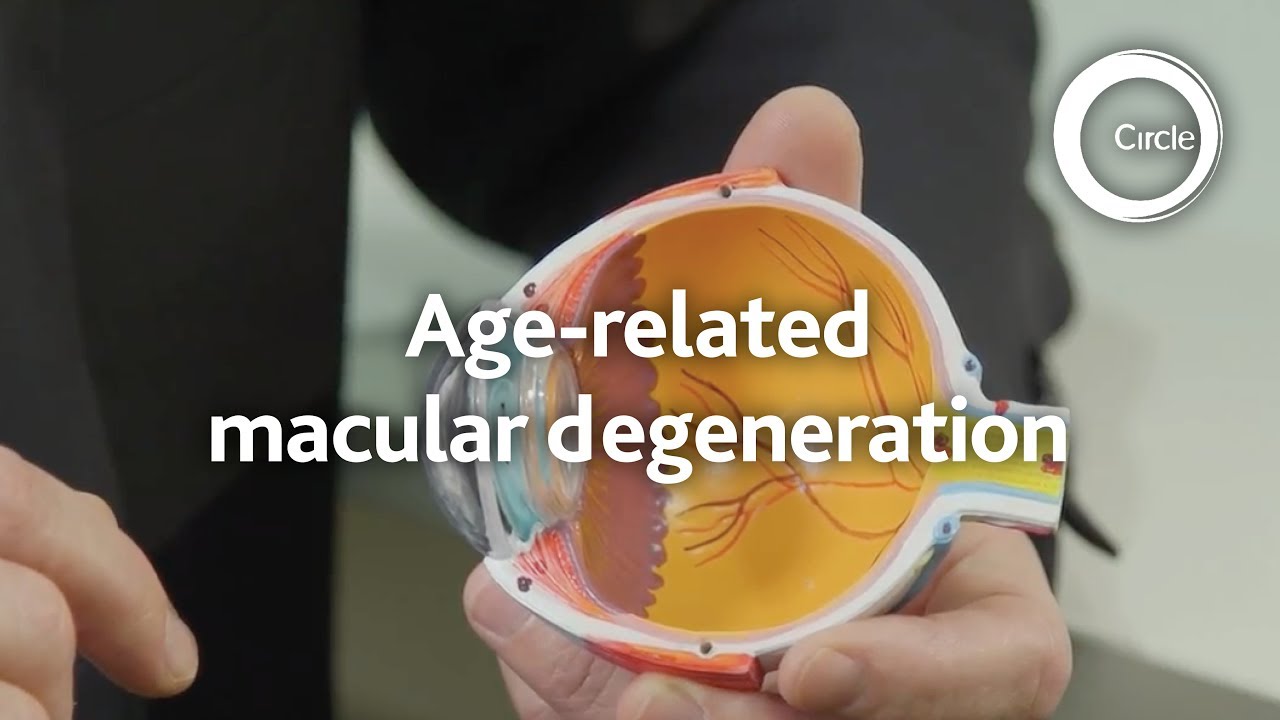
This page aims to give you some information about the condition of Age Related Macular Degeneration or AMD for short. It is one of the commonest causes of poor vision amongst retired people with almost 50% of those over 75yrs having a degree of AMD.
The retina is situated at the back of the eye and acts like the film in a camera. It is the part of the eye that converts light into electrical impulses which are then passed along the optic nerve to the brain and form the image you see.
This area of the retina is responsible for most of our central vision. Unfortunately, this is the part of the retina which Macular Degeneration affects. It does not affect the retina outside this area, which means that your peripheral vision will never be affected by this condition. It is only the central vision which is affected causing difficulty in reading but NOT total blindness.
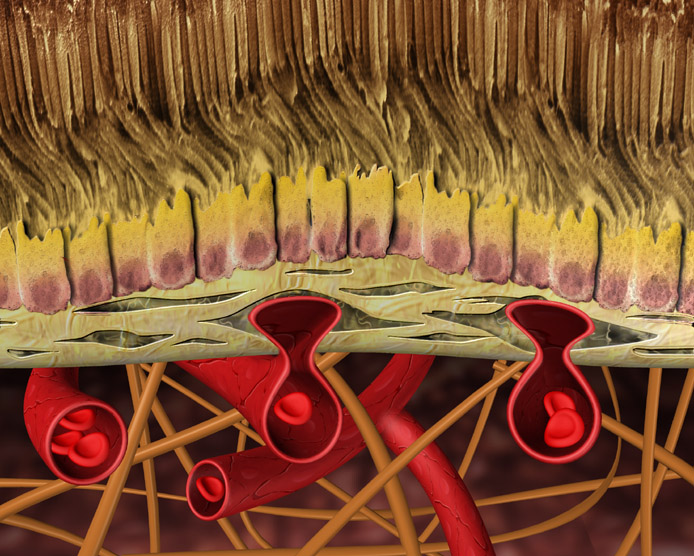
DRY type – is a gradual thinning of the central retina which usually takes many years to develop
WET or Disciform type – here the body tries to heal the ageing retina by making new blood vessels grow into the retina. Unfortunately, these are very fragile and often bleed. This can lead to a sudden deterioration of vision. The vision may become distorted and straight lines, like window panes, may appear bent.
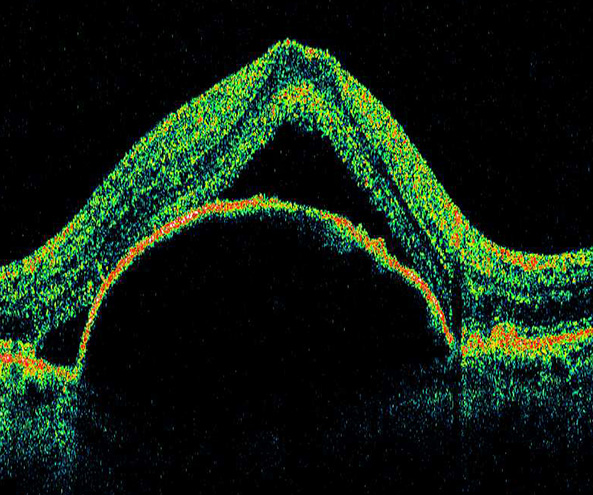
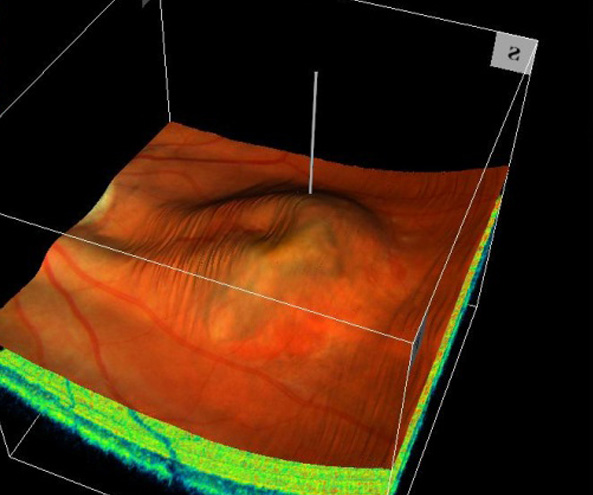
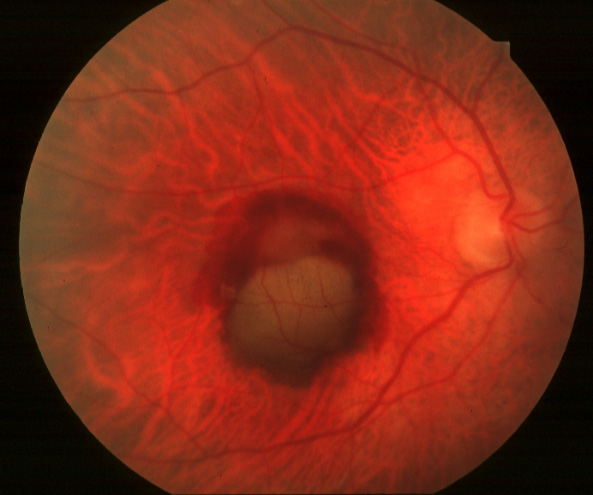
Is there any treatment? Most people have the dry form for which there is no specific treatment other than dietary supplements – see below. Although the condition may slowly progress, it will never make you go completely blind, as it does not usually affect the peripheral vision. Some people have the wet form of macular degeneration. Fortunately treatment is now available in the form of anti growth factor injections (Lucentis, Eylea, Vabysmo (Faricimab)). In most cases these offer around a 30% chance of visual improvement and a 95% chance of stabilistaion. Therefore, urgent diagnosis and treatment gives a better visual outcome.
You should ensure that you have an up to date pair of glasses. Full frame reading glasses are better than Bifocals of Varifocals. If you are having difficulty reading, please ask to be referred to the Low Vision Aid Clinic for advise on magnifying aids. Remember extra lighting can help with reading.
Good advice for everyone young and old is to wear a pair of UV blocking sun glasses together with a brimmed hat when outside in the sun.
If you are a smoker, research has shown that smokers have a higher instance of Age Related Macular Degeneration and I would encourage you to stop smoking to help decrease your overall risk as well as avoiding other medical problems.
Results from the AREDS 1 and 2 studies show that taking supplements containing high levels of antioxidants, lutein and zinc, significantly reduced the risk (by about 25%)of advanced age-related macular degeneration (AMD) in patients with high risk characteristics. The supplements benefited patients with both the wet and dry forms of AMD. Supplements did not provide benefit for those with either early AMD or no AMD. Previous studies have suggested that people who have diets rich in green, leafy vegetables have a lower risk for developing AMD. However, the high levels of dietary supplements that were evaluated in this study are difficult to achieve from diet alone. Five year follow up of patients who are taking the high dose preparations has shown no significant side effects other than a mild increase of non specific genito-urinary tract problems which is of questionable significance.
Please contact my admin team for advice on the latest recommended combination supplements. 0800 644 0900 or 0800 644 0700.
This new device offers the potential for improved vision in patients with advanced dry or wet disease affecting both eyes. Please see separate info page for further details.
Television
Sit closer to the TV to help you see, this will do no harm.
Driving
You must be able to read a number plate confidently at 20.5 meters (67 feet) to satisfy the DVLA standards. If you cannot then your insurance is invalid and unfortunately you cannot drive.
Partial Sighted and Blind Registration
For those whose vision is badly affected registration brings many benefits. The support team will visit you in your own home and assess whether you need any additional help or appliances. They can arrange the talking book and other support services which you may find very helpful.
The Macular Society
Darwin House, 13a Bridge Street,
Andover, Hampshire, SP10 1BE
Tel. 0845 2412041
Website. www.macularsociety.org
Many patients have found this organistion to be very helpful and supportive.
Talking Newspaper Association of the United Kingdom
90 High Street
Heathfield, East Sussex TN21 8JD
Tel. 01435 866102
Website. www.tnauk.org.uk
Royal National Institute for the Blind
224 Great Portland Street
London W1N 6AA
Tel. 020 7388 1266
Website. www.rnib.org.uk
Partially-Sighted Society
7/9 Bennetthorpe, Doncaster
South Yorkshire DN2 6AA
Tel. 0844 477 4966
Disclaimer : The information provided in this website is intended as a useful aid to general practitioners, optometrists and patients. It is impossible to diagnose and treat patients adequately without a thorough eye examination by a qualified ophthalmologist, optometrist or your general practitioner. Hopefully the information will be of use prior to and following a consultation which it supplements and does not replace.